




- Writing Content Creation
- Software development
- Graphic design
- Copywriter
- Software engineer/web developer
- Digital marketing consultant
- Social media manager
- SEO specialist
- Media buyer
- Photographer/videographer
- Web designer
- JavaScript, CSS, and HTML. Web development is still one of the most in-demand jobs in the freelancing markets
- Web App Development
- WordPress Design & Development
- Project Management
- Cloud Computing
- Data Science & Analysis
- Administrative Assistance
- Consulting
- Photography & Videography
- Social Media Manager & Community Manager
- Virtual Assistant

Ultimate Guide to Freelancing in Latvia in 2026
What is a Freelancer in Latvia?
A freelancer is an independent worker in Latvia who earns a living working for different businesses or organisations on a flexible per-job or per-task basis, typically for short-term work.
Latvia offers many benefits to freelancers, making it an attractive destination both for those looking to move and those hoping to build a career by freelancing. The country is well connected, with low transport costs, access to international markets and a variety of business opportunities. Here are some of the benefits to being a freelancer in Latvia: 1. Cost-effective: With lower labor costs compared to other countries, Latvia is an affordable place to get a job done without cutting corners. Business costs and taxes are comparatively low, meaning that freelancers have more money available to invest in their business. 2. Connectivity and markets: Latvia is well-connected to the international markets. This allows freelancers to quickly and easily access global markets and resources, maximizing their potential for success. There are also good opportunities for networking, as companies from other countries regularly visit Latvia for business. 3. Quality of life: Latvia has a thriving capital city, with a modern economy and a rich cultural life. It is also the European Union’s greenest country. Those who choose to move to Latvia will benefit from a high quality of life, with improved air and water quality, clean energy, a low crime rate, and a wide range of leisure activities. 4. Work-life balance: Latvia offers excellent work-life balance. The country’s relaxed atmosphere provides business owners with the opportunity to balance work with leisure, with pleasant weekends in nearby cities and a variety of leisure activities. Overall, Latvia is a great place to start a freelancing career. With low costs and good connections to global markets, as well as a quality of life that is second to none, freelancers in Latvia enjoy the freedom to create their own working hours, be their own boss, and achieve great success.

What are the benefits of Self-Employment in Latvia?
Freelance jobs are typically work paid by the hour, day or month. Whereas per task work, or per project outcome is usually paid on satisfactory completion of the work task, or tasks. These tasks are commonly referred to as freelance gigs.
Self-employment in Latvia has many benefits, the most notable being the lack of extensive government involvement and pressure. In Latvia, self-employed citizens are subject to a much lower tax rate than a regular employee, which allows them to keep more of the money they earn. Furthermore, the wide array of available freelancing opportunities in Latvia make it a great place to become self-employed. In addition to the low tax rate and varied job opportunities, many freelancers in Latvia are deciding to move to Latvia to take advantage of the relaxed visa regulations and free movement within the European Union (EU). In Latvia, international firms and entrepreneurs can set up their residence without having to deal with complex foreign immigration regulations. Freelancing opportunities in Latvia are also plentiful – ranging from graphic design, web development, data entry, customer service, IT support, writing, translations, and much more. There are also opportunities for freelancers who specialize in highly specific industries, such as medical transcription or accounting. Latvia is home to a wide range of international companies, including many that require freelancers to process customer data or provide customer service. Due to the large number of international companies based in Latvia, many freelancers in Latvia also have the opportunity to work remotely in other EU countries or to take remote gigs with companies based in other countries. This makes broadening one’s client base and expanding their reach easier, giving freelancers living in Latvia the opportunity to make more money than they could by focusing on the local market. Finally, the country’s commitment to the digital economy and digital nomad culture make Latvia an increasingly attractive destination for those interested in becoming self-employed and reaping the rewards of digital nomadism. With its low cost of living, warm climate, and liberal visa regulations, Latvia has the potential to become a popular destination for those who want to pursue a career as a freelancer.

Find & Hire Freelancers in Latvia?
The rise of freelance work has accelerated the gig economy movement, especially the online marketplaces associated with the gig economy and Future of Work.
Freelance jobs and gigs in Latvia continue to become more popular in recent years. As the Latvian economy continues to grow, the demand for freelance jobs continues to increase. Highly paid and in-demand freelance jobs in Latvia include the following fields: 1. Web Developers: Web developers design, code, and maintain websites for businesses and organizations and are highly sought after in Latvia. Rates usually range from €20- €40 per hour. 2. Graphic Designers: Graphic designers create various forms of visual media, including logos, infographics, advertisements, layouts, and other artwork. Rates range from €20 - €50 per hour. 3. Content Writers: Content writers create written content for businesses and organizations, such as blog posts, website copy, and press releases. Rates range from €15 - €35 per hour. 4. Software Developers: Software developers create computer programs and applications. They work closely with clients to develop software to meet their individual needs. Rates range from €30 - €60 per hour. 5. Social Media Managers: Social media managers are responsible for creating, managing, and growing an organizations presence on social media websites. Rates range from €15 - €50 per hour. 6. Video Editors: Video editors take raw footage and use editing software to create complete videos for businesses and organizations. Rates range from €25 - €50 per hour. 7. Translators: Translators work with text, audio, and video files to convert content from one language to another. Rates range from €15 - €35 per hour. 8. SEO Consultants: SEO consultants provide advice and guidance on how to improve a business or organizations visibility on search engines. Rates range from €30 - €50 per hour. 9. Virtual Assistants: Virtual assistants provide administrative, creative, and technical support to businesses and organizations. Rates range from €15 - €35 per hour. 10. Copywriters: Copywriters write catchy, persuasive, and informative copy for businesses and organizations. Rates range from €20 - €50 per hour.

What are popular Freelancing roles in Latvia?
Marketing
- Publicist
- Digital Marketer
- Social Media Marketer
- Product Manager
- Marketing Strategist
- SEO Expert
- Advertising Executive
- Communications Expert
- Media Executive
- Journalist
Information Technology
- Ecommerce Expert
- Web Designer
- Web Developer
- Software Engineer
- IT Consultant
- Cyber Security Consultant
- Cloud Architect
- Big Data Analyst
- Data Scientist
- Project Manager
Creative
- Content Creator
- Copywriter
- Writer
- Creative Director
- Art Director
- Animator
- Video Producer
- Graphic Designer
- UI/UX Designer
- Photographer
Wondering what the process is to start freelancing in Latvia?
Identify and embrace your niche
Identify your current skillset and where your passion lies. Most freelancers are experienced professionals with numerous years of experience working professionally in a permanent position but looking to become self-employed and a master of their own destiny.

Focus on your freelance skills strengths and weaknesses
Research the capabilities expected of a freelancer within your area of expertise and identify your strengths and weaknesses. This will help you with your personal development plan and billable pay rate.

Ensure you have all the appropriate equipment
Common checklist for freelancers include: Home Office: Comfortable office desk & chair. Printer/scanner. Mobile devices. Fast & reliable internet. Cloud products for storage. Software products to help you complete your work

Create A Portfolio
Build a portfolio of your work you can showcase to prospective clients. This can be publicly viewable on the internet, or accessible on permission, depending on the nature of your work.

Getting Started - Finding the best Jobs & local or remote Clients in Latvian
Getting started begins with finding new clients. How can this be achieved? Where can freelancers find new customers? Start by going to dedicated meetups. Ensure your LinkedIn profile is up to date. Network, network, network! Update your promote profile on gigexchange.com. Use online freelancing platforms and apply for freelancing jobs and freelance gigs.

Try Freelancing Part-Time or as a Side Hustle
If you are just starting out and testing the water for freelancing. Then working part-time of as a side hustle is perfect for understanding whether you enjoy freelancing. What kind of rate to charge and how successful you are. Freelancing on the side can be completed on evenings and weekends, outside of your primary job and it will also help bring in some extra income too.

Find The Right Freelance Platform in Latvia
With so many freelancer websites and freelancing apps to choose from, we have listed the top 5 Freelance Platforms in Latvia below:

Top 5 Freelance Platforms in Latvia
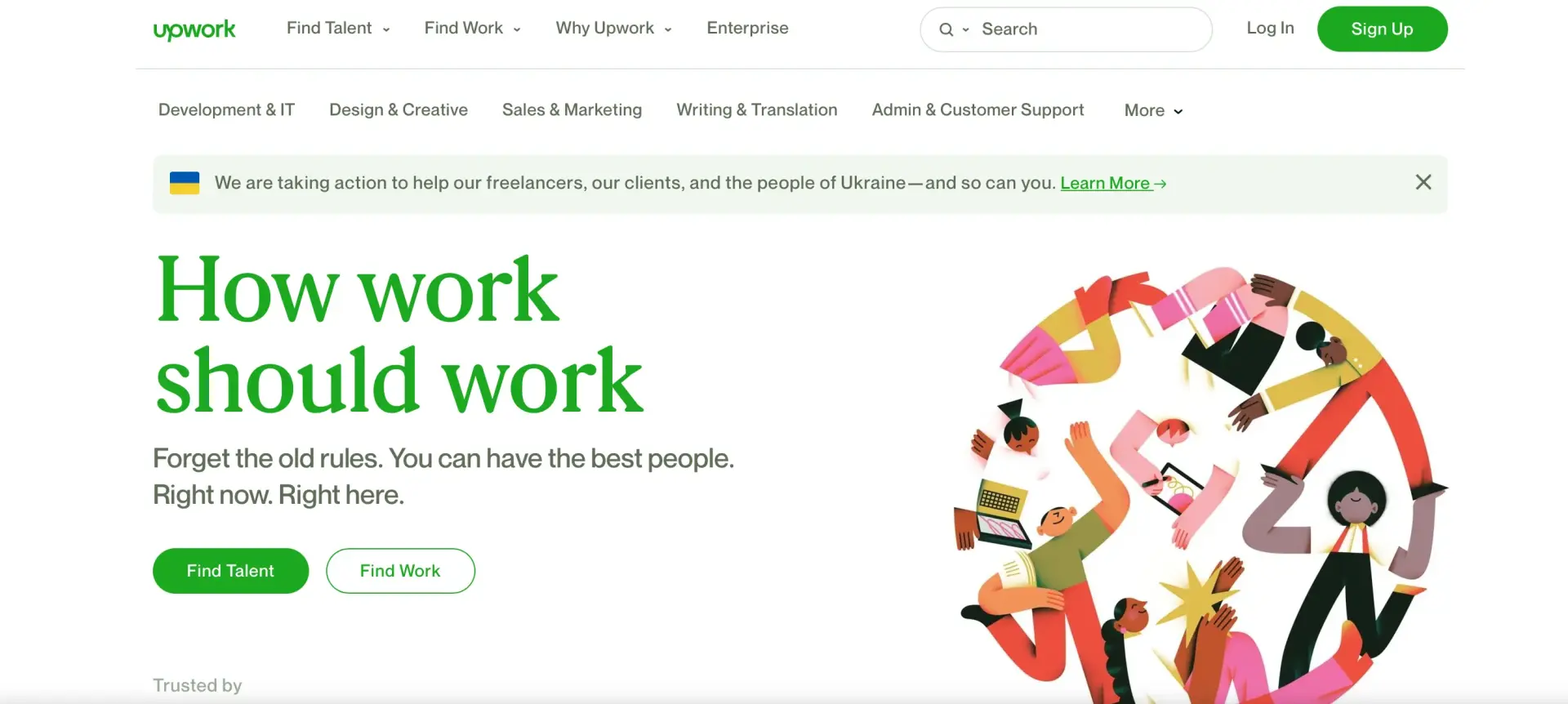
Upwork
- Type: Marketing, Software, Design
- Pros: Secure pay, Large market share
- Cons: Lengthy selection process, High service fees (client & worker)
Upwork is the largest freelancing website that connects clients and freelancers all across the world.
The web app provides a large range of skills and categories, from web and software development to marketing and accounting.
Clients and freelancers have multiple ways to connect – clients can choose to advertise a job and hire talent or buy a predefined service from the project catalog.
Whereas freelancers can access the job board and offer a service to sell.
To get started as a freelancer on Upwork, first create a profile.
Upwork has a sliding commission scale, rewarding the more you work, the less money you pay. The commission fee starts from 20% for the first bill of $500 and gradually reduces as you receive more money.
Payment withdrawal, includes direct transfer, PayPal, and wire transfer.
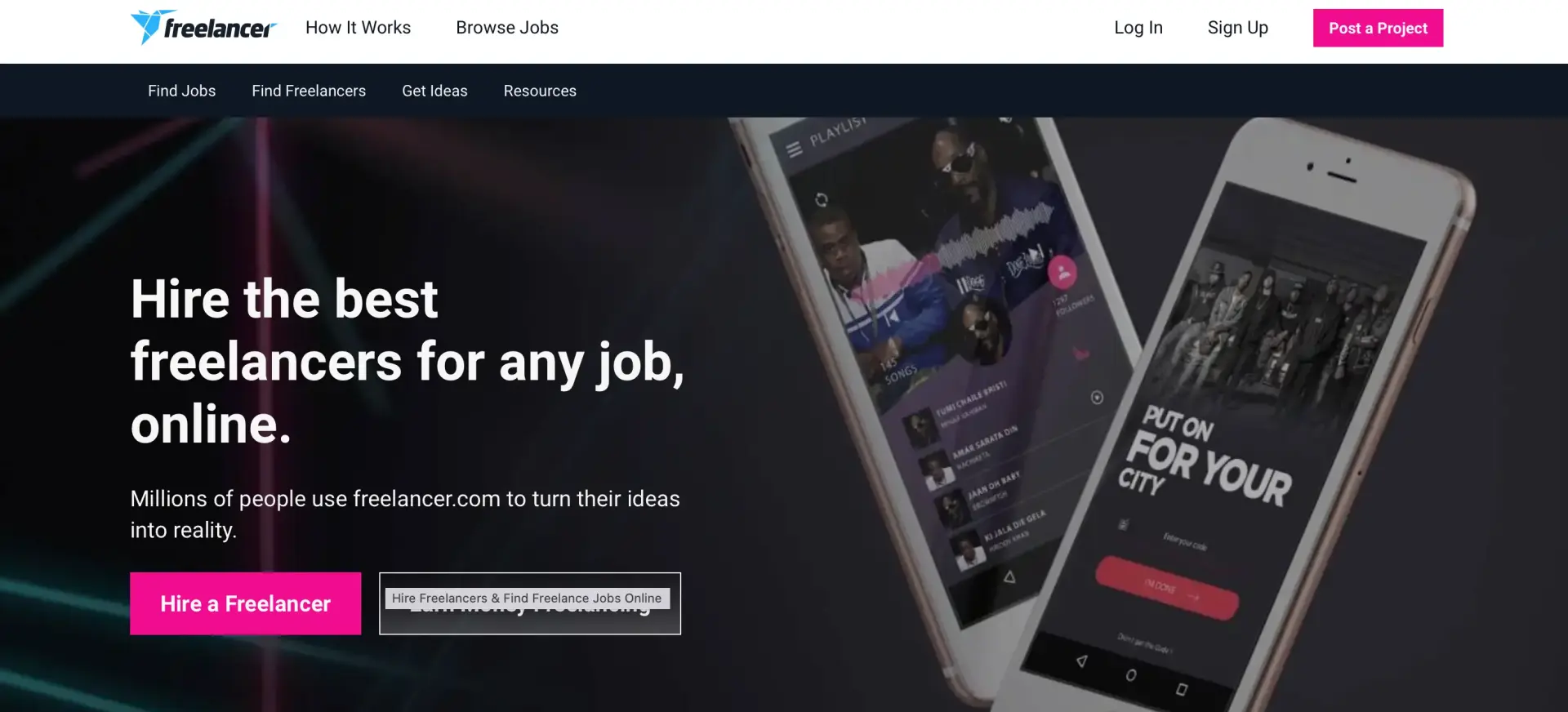
Freelancer
- Type: Language, Tech, Marketing
- Pros: Progress tracker, Live chat, Good customer support
- Cons: Bad UI/UX, Spam freelancers, Fake clients
Freelancer.com is one of the original freelance websites where service provider professionals and international organisations unite to complete various projects. Registering as a freelancer requires you to fill out a short form. Provide detailed information, including your skills, educational background, and work experience.
Freelancers can apply for projects to gain work. In addition to projects, there are also contests, such as visual or design work. Freelancers can gain from these contests by earning money along with reviews on their profiles.
Every freelancer will receive full payment after completing a job. However, the platform takes 10% of your total earnings for contests and fixed projects. Payment is via PayPal or wire transfer for withdrawal.

Fiverr
- Type: Marketing, Web development, Social media
- Pros: Popular site with large number of customers, Free registration
- Cons: High commission charge, Long payment process
Fiverr is a freelance platform connecting freelancers and business owners requiring expert on demand talent for services in various digital projects, including website design, copywriting, and sales lead generation.
This website provides a slick process for freelancers and business owners to collaborate. Sellers can sign up for free, list their gigs, and set their own prices. Whereas, buyers can easily browse through different work categories to purchase. Whenever a buyer purchases a gig, the app immediately charges their account and places the money on hold. The platform pay proicess will then take a commission fee and send freelancers 80% of the offered price.
Depending on each freelancer’s seller level, it can take up to 14 days to withdraw their earnings. There are multiple options to withdraw the payments, such as debit card, PayPal, and wire transfer.
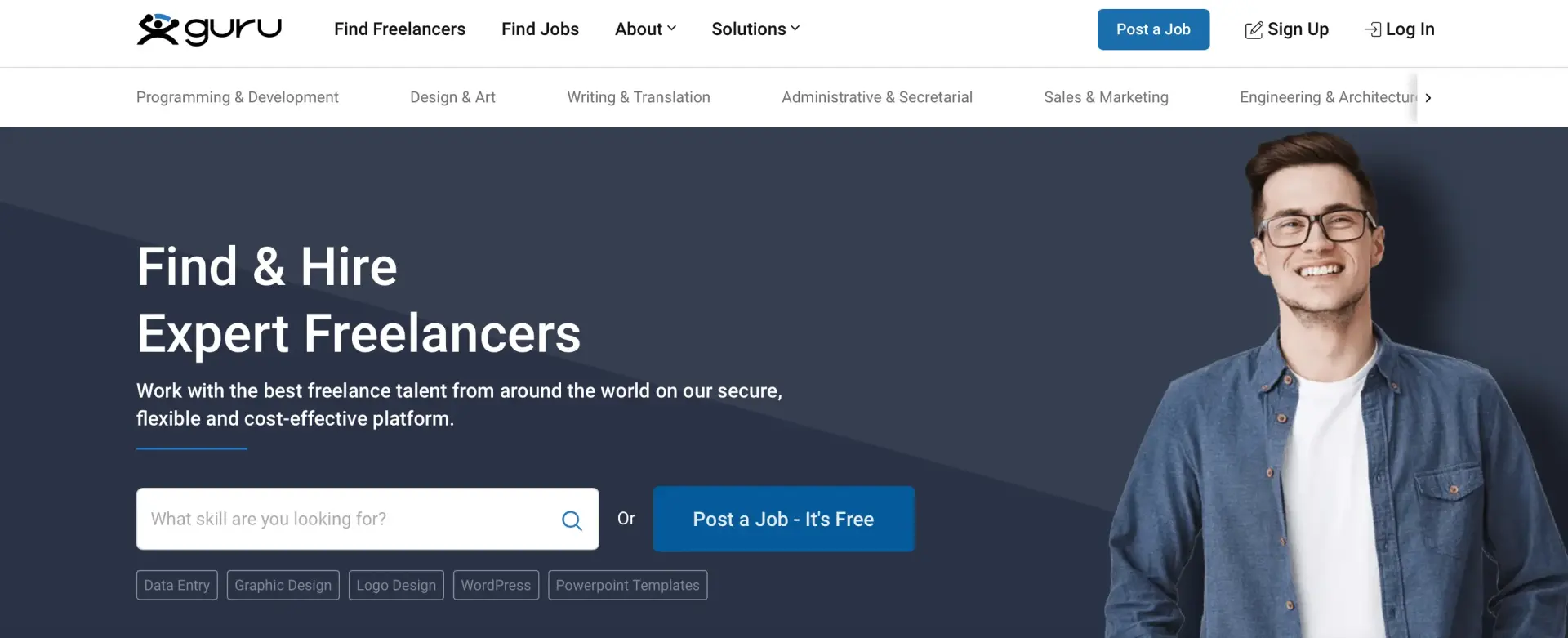
Guru
- Type: Marketing, Tech, Admin
- Pros: Secure payment, Customized job listings, Free membership
- Cons: Potential fake clients
Guru is an international freelancer marketplace. Companies can hire professionals with various skills, such as software engineers, web designers, and digital marketing freelancers. This freelance platform is easy to browse freelance job listings and submit applications to clients. Start by signing up and building your freelance profile. The app will provide job recommendations based on your defined skills and experience.
Freelancers can bid for different projects and provide a fixed price for each. Freelancers can receive pay in various manners, including PayPal and wire transfer. More importantly, the site ensures freelancers get paid timely with SafePay protection.Every freelancer that signs up on this freelance website gets a free basic membership. This can be upgraded to paid membership plans with more features to benefit the freelancer.
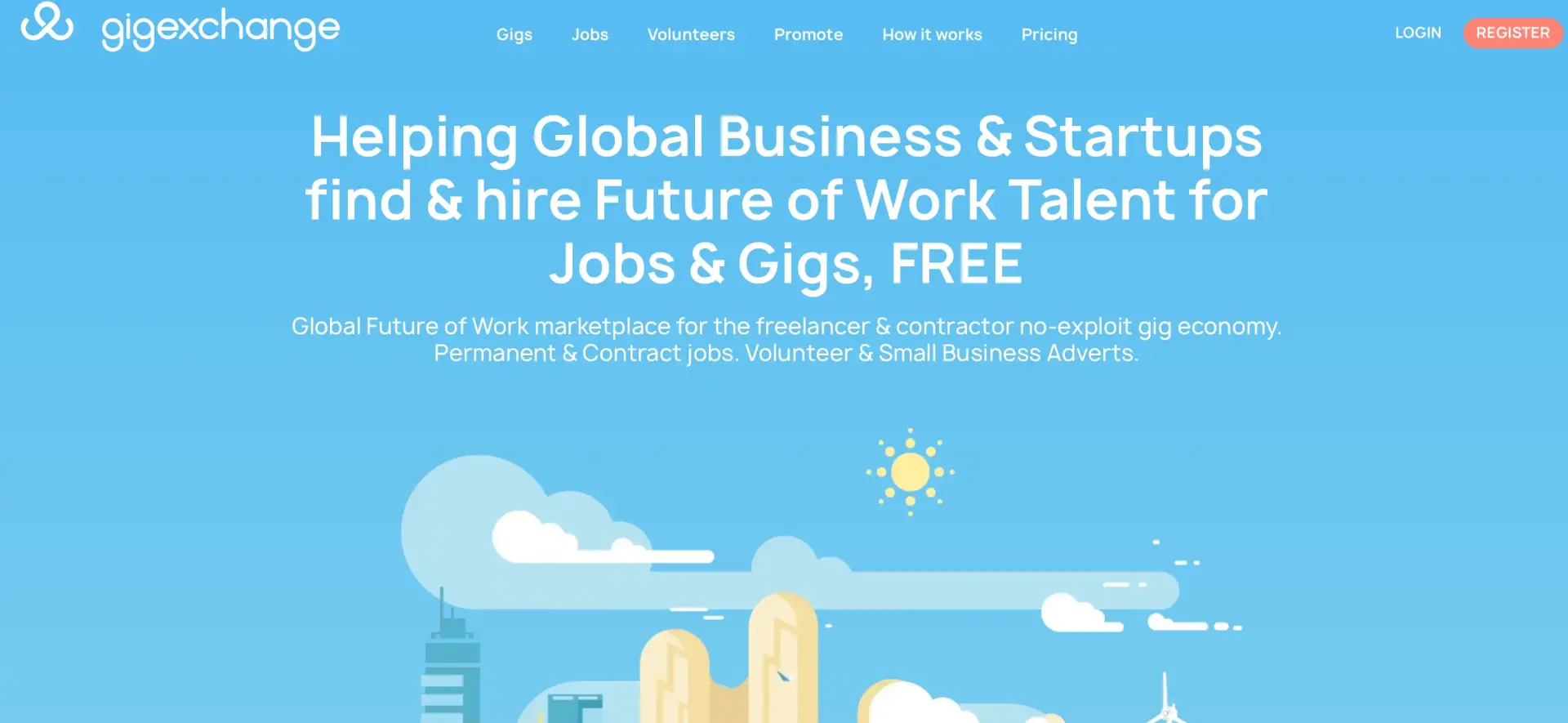
gigexchange
- Type: Creative, Media, Technology, Marketing, Software, Security
- Pros: Secure pay, Push notifications, Live private chat, Free membership, Low commission, Identity verified freelancers only
- Cons: Still in growth phase
Gigexchange is a Global Future of Work marketplace for freelancers to connect with businesses for work. Gigexchange allows freelancers to complete freelance gigs (specific work tasks and outcomes - with payment after the work is completed), freelance jobs (time based work - typically short term contracts which are arranged off platform). Freelancers may also volunteer their valuable services free of charge via the Volunteer service.
Registration is quick and simple, completing a skills and experience fields for its AI/ML function. Registering for Freelance Gigs via the Gig Worker section requires Identity verification prior. This is quick and simple, providing a few ID documents to become identity validated, building trust in the marketplace.
The commission rates for freelance gigs is the lowest of all freelance apps, at just 5%. For freelance jobs there is no commission for finding work.
There are no subscription fees or limits on the number of applications for jobs or gigs.
Gigexchange operates across 39 countries, allowing freelancers to connect with local businesses and remote, or work from home freelance work.
The platform works as a progressive web app (PWA) which means both buyers and sellers can use the standard website or mobile app to complete work services.
The platform supports VISA & Mastercard debit & credit cards. Payment withdrawal for freelancers is via Stripe and typically takes 5-14 days from gig completion.
Building your personal Brand & Online Platform Reputation
As you gain more customers, your reputation will grow. This will allow you to acquire new customers by both word of mouth referrals and via freelance platform ratings and testimonials.

Charge the Right Price & Rates $$$$$$
As your reputation and experience/expertise develops, so will your pricings. Periodically review your rates to ensure they are both fair and at market rate internationally and in Latvia
Managing multiple freelance jobs and clients
A key skill being a freelancer is managing and juggling multiple clients and projects simultaneously, along with maintaining a pipeline of new work when your schedule permits. This requires great personal organization skills and planning.

Deliver Beyond Expectations
The first rule of conducting great work is understanding the requirements and outcomes expected of you. The second rule is completing over and beyond this. This will result in repeat work and referrals, allowing you to grow your freelance business effectively.

Stay on top of the admin
Self-employment involves much more administrative work than being a permanent employee. There are various tasks requiring constant attention throughout the months and years. The major administrative work includes:

Managing Freelancing Financials
We all love making money, but we also need to stay on top of our revenue, accounting and taxes. Some great online products to help with this include:

Never Forget to Pay your Taxes
Keeping the taxman happy is critical to running a successful business. Stash away 30-40%+ of each paycheck for taxes. Pay quarterly taxes. Save every receipt and research applicable expenses. Hire an accountant or bookkeeper if this is not your strength.

Personal Development
Staying an expert in your specialisation is key to your success as a freelancer in Latvia. Allocating time and resources to continuously improve and upskill is essential.
Freelancers use various tools and online training platform to do so, such as:
Online training courses
Writing
- Copywriting for Creatives
- 10x Emails
- ConversionXL
- Copyhackers’ Copy School
- HubSpot’s Content Marketing Certification
Design
Marketing
Business Administration
Freelancing Information
Software & Data Tools
Join freelance communities
Join as many Social Media groups for freelancers in Latvia to help you build your network.
Join local Slack groups of interest to you. Sign up to meetup.com and search for freelance meetups in Latvia and become an active member.

How to Be a Successful Freelancer
Start with understanding why you want to freelance? Then use our guide to ensure you give yourself the best chance of creating a successful freelance career.
One of the most important questions to ask yourself is. Can you afford to freelance? Starting out is the hardest part, there will be periods of no, or little income coming in. Do you have a financial contingency plan? If so, how long for. If the period of time is short, perhaps begin with freelancing as a side hustle on gigexchange.com
Ask yourself: Is Freelancing for Me?
If you dont try it, you will perhaps never know. But plan and prepare as much as possible prior to jumping in, to ensure you understand the risks and rewards of freelancing in Latvia.
One of the most important questions to ask yourself is. Can you afford to freelance? Starting out is the hardest part, there will be periods of no, or little income coming in. Do you have a financial contingency plan? If so, how long for. If the period of time is short, perhaps begin with freelancing as a side hustle on gigexchange.com

What are the Pros and Cons of Freelancing?
Advantages of freelancing
- You’re your own boss
- You set your own rate and select which freelance gigs and jobs you work
- You have a better work-life balance by working when and where you want
- You could pay less in taxes if managed well
Disadvantages of Freelancing
- You’re not your own boss
- You have to manage your own benefits, taxes, and accounting
- If you don’t work, you don’t make money. No sick leave in freelancing
- No job security

Find the Best Freelance Jobs in Latvian in 2026
Search for the Best Freelance Jobs Portals in in Latvia to begin and grow your freelance career.
Best Latvia Job Website Name
Latvia Job Board Pricing
Email sales for prices
Email sales for prices
FREE Job Advertising in Lithuania
Email sales for prices
Email sales for prices
Which Cities & Regions can I find Freelance Jobs & Freelance Gigs in Latvia?
Need to find a freelance job near me in in Latvia? Check out local freelance jobs near you.
Additional Freelance Information in Latvia
We have collated some additional useful Freelancing information available online in 2026 so you can gain extra knowledge, resources and potential new Freelancing job opportunities, or understand how Freelance Job Seeking can work for you.
Frequently Asked Questions
What are popular freelance jobs in 2022
How is remote work and work from home/work from anywhere benefiting freelancers?
Freelancers are independent contractors who either work on a retainer or on a project-by-project basis. Freelancers set their own work hours, decide where they want to perform their tasks, and usually only provide a service or product for a predetermined fee — with no company benefits or services included. Remote working, or working from home (or working from anywhere) has simply increased the work opportunities for both businesses hire remote talent and freelancers having an increased pool of clients. Freelancers can conduct all work remotely, without the need for being near the business headquarters, or having to go into the office.
Where can I find freelance work as a side hustle?
- Upwork
- gigexchange
- Taskrabbit
- Wonolo
- Upshift
- Jobble
- Fiverr
Is freelancing worth it?
Absolutely Yes! If you are a highly skilled individual who has a passion for the work you complete. Are great at what you do. Enjoy diverse and busy work environments. Love juggling multiple tasks and projects at once. Enjoy meeting new people and being paid for your value. Enjoys working remote and loves being your own boss. Then yes, freelancing is worth it!
What is the difference between a freelancer and a digital nomad?
Both a freelancer and contractor are self-employed experts. The main difference is that digital nomads are freelancers who love to work and travel with no set ‘home’. Digital nomads are individuals who are location transient but use modern technologies to work remotely whilst living a nomadic lifestyle.
How is the gig economy impacting freelancers?
Businesses benefit from the gig economy by gaining access to highly skilled on-demand talent to complete defined project work, or set tasks. Gig workers, also known as contingent or contract workers or freelancers, benefit from the flexibility and access to new opportunities that might not have been available before. Platforms such as gigexchange.com are providing local and remote freelance gigs and freelance jobs to freelancers globally.
What are the benefits of hiring freelancers
- Flexibility and Specialised Expertise. On-demand talent is now available to businesses for specific work tasks (freelance gigs) or specialised freelance jobs (short contracts) that cant be fulfilled by inhouse employees in a flexible manner
- Reduced Risk. Hiring freelancers on a short term basis reduces the risks on bad hires through the recruitment process
- Savings. Pay for talent when only you need it.
- High Quality of Work. Freelancers are experts in their trade. Hire with confidence when using online platforms by hiring trusted and reputable experts only.
- Worldwide Reach. Remote working means gain access to talent working from anywhere in the world
What is the difference between a freelancer and a contractor?
Both a freelancer and contractor are self-employed workers. Freelancers are more typically associated with creative and media industries. Contractors are terms used to describe independent employees in I.T. or civil construction.
What is the difference between a freelancer and an employee?
Freelancers are self-employed individuals who are employed by businesses on short-term projects, or dedicated tasks to complete. They receive no employee benefits from their clients and pay and manage their own taxes. Freelancers are their own boss, setting their own hours and work lifestyle. They typically juggle multiple clients simultaneously.
Freelancers determine their own rates, which may be hourly or on a per-project basis. They typically work remotely, though may occasionally meet with clients in person or visit the office for meetings.
Employees permanently work for a single employer and are paid fixed remuneration in the form of an annual salary.
The employer provides work benefits (such as holiday time, sick leave, healthcare, and pension plans) and is also responsible for managing their taxes and contributions. Employees typically have a contract that defines their expected work hours, role, and the terms of their employment. Since they are a permanent part of the company, employees are usually required to serve a notice period before leaving the company. They also enjoy more job security than freelancers or contractors. Businesses can give notice to freelancers much quicker and easier than permanent employees.
Are self-employed freelancers the Future of Work?
Freelancing and self-employment has been trending up for many years. As of 2022, the freelancing industry is growing three times faster than the traditional workforce. And statistics predict by 2027, the majority of the US workforce will be freelancing.
As many as 64 percent of freelancers find their work online on platforms such as gigexchange.com, and most now no longer require a freelancer to be physically on site. For remote based freelancers and digital nomads, this means their location is no longer an inhibitor to work. The digital economy is fueling the freelancing industry growth.
How to on-board remote freelancers?
- Have an on-boarding process & checklist pre-defined
- Ensure all appropriate access to software tools and products and user accounts are setup prior to day 1
- Welcome employees personally immediately on day 1 via an approved business digital communications channel such as teams or slack
- Use communications technology to build a culture of immediacy, collaboration and camaraderie
- Set clear expectations before day one: pre-boarding
- Allocate a remote buddy or mentor
- Regularly follow up and pulse check with remote freelancer to ensure they are happy, engaged, understand their roles & responsibilities and not blocked from working
Whats the difference between a freelance job and freelance gig?
A freelance job is a standard work contract for a set period of time. Typically 3-6 months. These jobs are paid by the hourly or daily rate. Freelancers usually invoice on a weekly or monthly basis for standard freelance jobs.
Freelance gigs are work assignments with explicit scope of works and expected outcomes. Freelance gigs are typically paid out once the work has been completed to the customers satisfaction.
Is the Future of Work freelancing?
The world of work is slowly drifting away from long term (or permanent) work engagements. Moving to a more on-demand model, where businesses onboard specialised experts for specific tasks or projects. Freelancers are well placed to take advantage of the movement and experienced in the risks and benefits of freelance work and self employment.
See here for more Help & Support questions